
Learn This Earlier than You Purchase That TV Streaming Stick – Krebs on Safety
Safety consultants have been sounding the alarm for years concerning the dangers of utilizing generic TV containers that promise limitless content material streaming for a one-time payment, warning that they secretly hire the consumer’s Web connection out to strangers. However a groundbreaking new evaluation finds these gadgets additionally routinely spoof themselves as cell phones clicking adverts on AI-generated web sites as a part of a sprawling operation that seeks to defraud on-line retailers and promoting networks.
Pedro Falé is a risk researcher with the safety agency Bitsight. Falé informed KrebsOnSecurity he was capable of peer inside an enormous and sophisticated advert fraud community by registering an expired area title that was used to coordinate pretend advert clicks throughout a very widespread model of those streaming gadgets often known as H96.
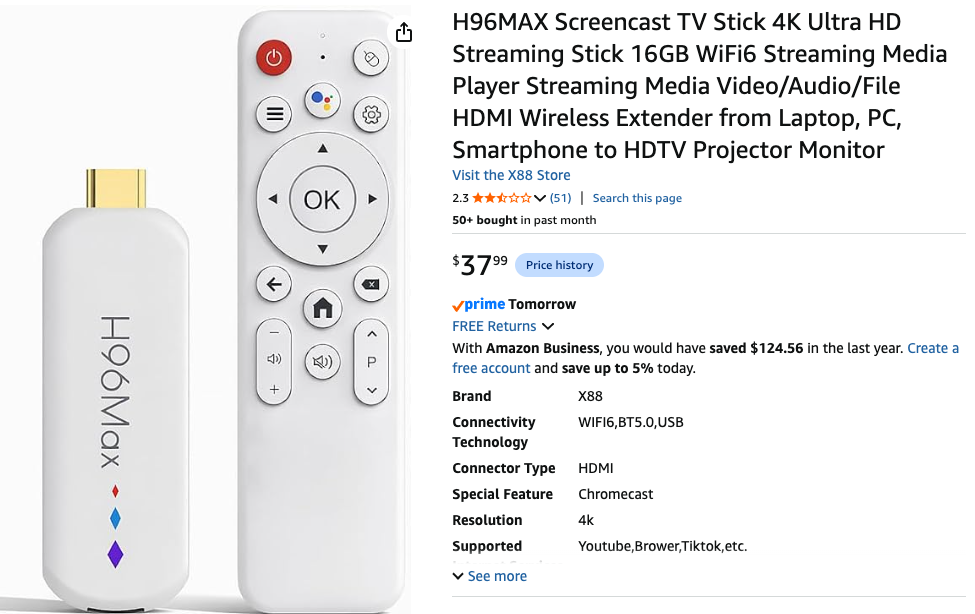
An H96 TV streaming machine at the moment marketed on the market on Amazon.
Falé stated the area he scooped up was beforehand used for telemetry, periodically gathering full {hardware} data and all the listing of put in apps from tens of hundreds of H96 streaming sticks plugged into tv units across the globe. However upon inspecting the visitors being funneled to the area, he found almost the entire TV containers transmitting information claimed to be cell phone fashions from quite a lot of producers, together with Samsung, Vivo, Huawei, and Xiaomi.
“We seen one thing was wildly unsuitable,” Falé stated. “A number of gadgets reporting to this manufacturing unit Android TV Field backdoor have been ‘telephones.’”
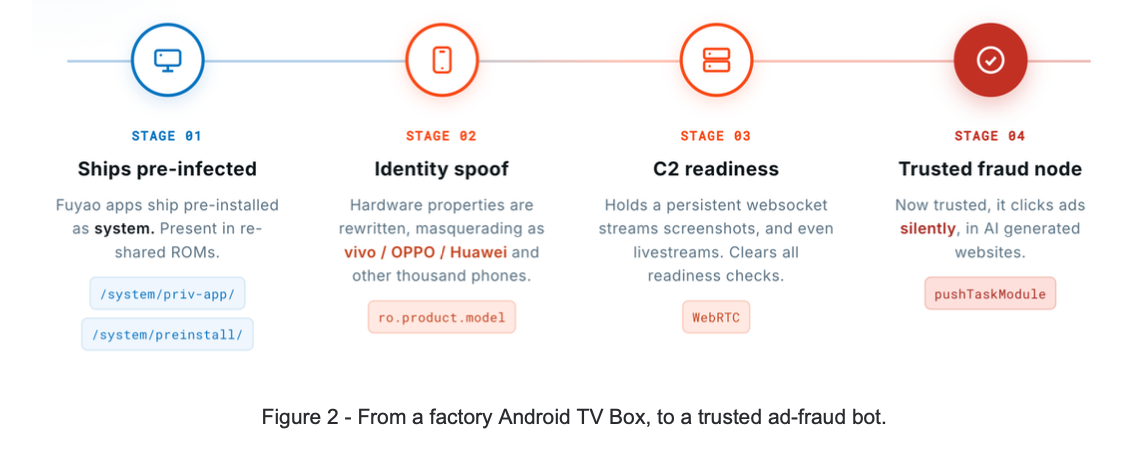
Picture: Bitsight.
The researcher discovered the entire gadgets reported having the identical two apps put in, and that these apps have been made by an organization known as Zhejiang Fengwo IoT Expertise Ltd, an entity based in 2019 in mainland China which operates an ad-publishing portfolio below the title Fengwo Group. Additional investigation into the Fengwo Group revealed it has registered a number of patents that match the interior workings of those apps.
“Bitsight TRACE recognized a number of Hong Kong, Singapore, and single individual ‘authorized’ shell identities used to gather the monetization and traced the operation again to a mainland China firm often known as Zhejiang Fengwo IoT Expertise Co., Ltd, which operates below the Fengwo Group,” Falé wrote in a report launched in the present day about their findings.
Falé stated an evaluation of the apps reveals they assist to coordinate an advert fraud community that makes use of these H96 gadgets as a captive visitors supply to click on on adverts at AI-generated web sites operated by the Fengwo Group.
Bitsight found the web sites include machine-generated information articles and graphics throughout a spread of classes, together with finance, well being, training, gaming, music and meals blogs. However additionally they discovered none of these websites displayed adverts except the machine visiting the web page matched the spoofed cell profile of those H96 gadgets.
AI DIGITAL HUMANS
The area for the Fengwo Group — fwgcloud[.]com — claims the corporate is “redefining the boundaries of human-AI interplay,” and that it has created greater than 120,000 “AI digital people” out there to hire for every part from emotional companionship to 24/7 customer support and artistic design.

The homepage for fwgcloud dot com.
Falé stated the Fengwo Group’s area shared its SSL certificates information with different domains related to the apps discovered on H96 gadgets, particularly the cellphone spoofing mechanism. He famous the area additionally has an inside wiki platform that immediately ties the Fengwo Group to a proprietary implementation of a Google-built visible programming language known as Blockly, which was initially designed to assist youngsters discover ways to write software program.
In accordance with Bitsight, the Fengwo Group’s staff use Blockly to construct the sham web sites, permitting low-skilled operators to tug blocks of code collectively of their Blockly editor — with none want to grasp what the underlying code blocks do or how they work.

The Blockly homepage.
“An operator can drag blocks collectively of their Blockly editor, to outline every fraud routine, given a process sort,” reads Bitsight’s report. “As soon as the routine is saved, it will get exported as JavaScript and uploaded to the S3 buckets. An operator doesn’t want as a lot understanding of the underlying technicalities, as it’s all set in place for ease of use.”
Bitsight even discovered one of many Fengwo Group app builders mentioning precisely these benefits, noting the developer remarked that “solely a small variety of highly-skilled builders are wanted to construct the template execution-unit photos,” and that “builders who create execution items from these templates have considerably decrease technical necessities, vastly decreasing the corporate’s working prices.”
Falé stated if a consumer’s H96 streaming stick is chosen for a particular fraud process, will probably be pushed the suitable Blockly module in line with the duty desired, which might embody silently launching an internet browser, visiting web sites, searching pages, managing tabs, and clicking on adverts.
To make sure the TV containers masquerading as cell phones can reliably click on on adverts displayed through the AI-generated web sites, the Fengwo group “fuses three imaginative and prescient and reasoning methods right into a single interface,” permitting the bots to appropriately determine an advert on the webpage and navigate the location very similar to a human would, the Bitsight report noticed.

Examples of advert touchdown pages linked to the Fengwo Group. Picture: Bitsight.
TV ON? PROXY. TV OFF? AD FRAUD
Bitsight discovered the H96 gadgets have been both relaying residential proxy visitors or collaborating in advert fraud, however by no means each on the identical time. In actual fact, they concluded that when these TV containers detect an HDMI sign from an hooked up tv — indicating the consumer intends to stream video content material — the field is normally functioning as a residential proxy. When the TV is off, it switches again to ready for advert fraud jobs.
Falé stated he believes the TV containers are arrange this manner as a result of its advert fraud actions are way more useful resource intensive and will intervene with the machine’s said objective — streaming video content material over the Web.
Regardless of repeated warnings from the FBI and safety business leaders concerning the safety and privateness dangers of utilizing these streaming gadgets, main e-commerce suppliers like Amazon, Greatest Purchase, Newegg and others proceed to promote a whole lot of various fashions and types that bundle unofficial variations of Google’s Android working system and are incessantly marketed (via online influencers) as a option to entry a broad array of streaming providers and dwell broadcasts with out a subscription.
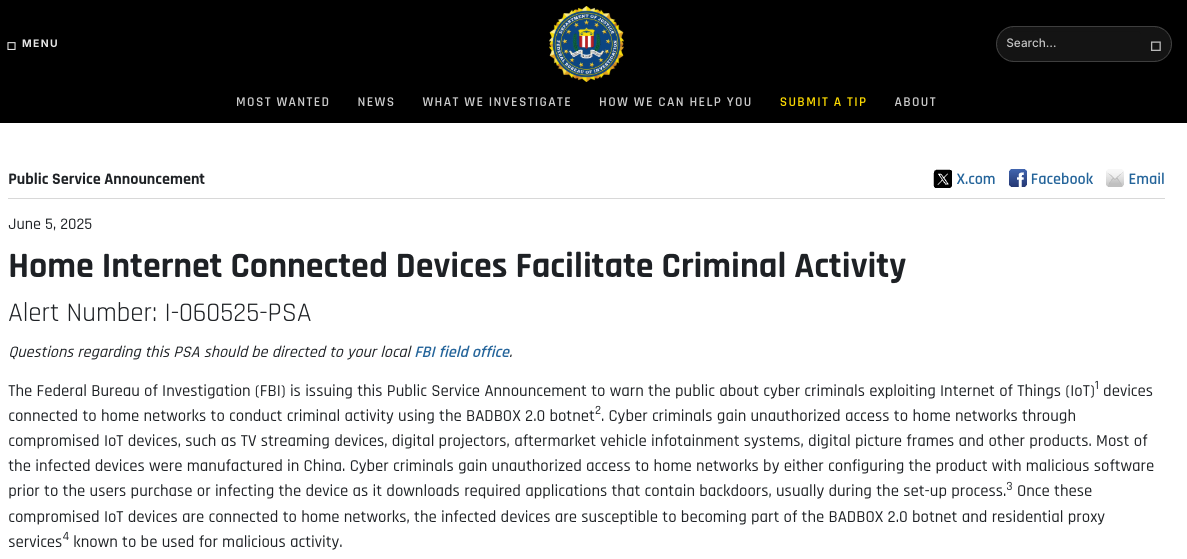
Picture: fbi.gov.
Along with enlisting the consumer’s TV field in advert fraud networks, these off-brand streaming gadgets nearly universally include residential proxy software program pre-installed. This software program rents the consumer’s Web deal with out to nameless paying clients, who run the gamut from aggressive content material scraping companies to ticket scalpers and outright cybercriminals.
What’s extra, as a result of these generic (and customarily grime low cost) TV containers are all horribly insecure by default and bereft of any type of authentication, putting in one on your private home or workplace community solely invitations additional mischief. In January, the proxy monitoring service Synthient documented how a number of botnets had rapidly enslaved millions of TV boxes utilizing a posh interaction of safety vulnerabilities in each the residential proxy software program and the streaming gadgets themselves.
SHOW ME THE MONEY
Bitsight stated it tracked roughly 38,000 TV containers globally phoning dwelling to the expired Fengwo Group area, and based mostly on that quantity the report estimates this advert fraud community brings in revenues of near $50,000 a day (not counting substantial income from the residential proxy facet of the enterprise). Nevertheless, Falé emphasised that these estimates are extremely conservative and based mostly on telemetry from simply one of many Fengwo Group’s core (however older) domains.
As for the Fengwo Group’s declare to have 120,000 “digital people” at their disposal, Bitsight’s report concludes it might be only a intelligent advertising and marketing scheme and/or a option to keep away from drawing suspicion to the corporate’s operations.
“Traditionally, when coping with proxy providers or DDoS, we typically see these web sites undertake inconspicuous facades, in order to not promote their DDoS functionality or botnet measurement,” Falé wrote within the report. “This is also the case right here.”
If the Fengwo Group really does have tens of hundreds of “AI people” at its beck and name, it doesn’t seem to have devoted any of them to fielding inquiries from its personal web site. KrebsOnSecurity sought remark from the Fengwo Group by emailing the contact deal with listed on the corporate’s homepage, however the request bounced again with the reply, “Your message couldn’t be delivered to postmaster@fwgcloud[.]com. Their inbox is full, or it’s getting an excessive amount of mail proper now.”
As Bitsight’s evaluation reveals, in relation to TV containers and streaming sticks, it’s finest to stay to call manufacturers from respected producers, after which to be sparing and cautious with any apps you select to put in on the machine — as many of those can bundle residential proxy software as well. Google says shoppers can verify whether or not or not a tool is constructed with the official Android TV OS and Play Defend certification by following these instructions.
Moreover, Synthient maintains a running list of IoT devices which have been recognized to ship to shoppers with residential proxy software program and different malicious apps pre-installed. Cautious readers will discover Synthient’s listing consists of different IoT gadgets other than streaming sticks and containers: Because the FBI has warned, residential proxy software program has additionally been present in different widespread client IoT gadgets from random manufacturers, significantly digital picture frames.
Source link