

Sequoia doubles down on Cymphony as AI brokers create new enterprise safety dangers
As AI brokers achieve entry to the identical delicate company information and programs as human employees whereas working at machine pace, enterprises are vulnerable to new safety dangers. Storied enterprise agency Sequoia Capital is betting huge on that shift, backing startup Cymphony because it emerges with $30 million in funding to assist corporations maintain their rising AI workforce in test.
The funding features a $25 million Collection A co-led by Sequoia and SMBC Fin Atlas Past Fund, valuing the New York- and Tel Aviv-based startup at greater than $100 million after funding. The spherical follows a beforehand undisclosed seed funding from Sequoia.
AI brokers don’t essentially undergo the identical entry and identification controls as workers, however they’ve entry to a number of programs and deal with massive quantities of company information. This makes it exhausting for enterprises to trace who has entry to what.
Cymphony is attempting to deal with that hole by giving safety groups a single view of workers, AI brokers, and different non-human identities, together with the programs and delicate information they will entry. On the core of its platform, the two-year-old startup has constructed what it calls a “workforce graph”. This brings collectively identification, information, and exercise indicators.
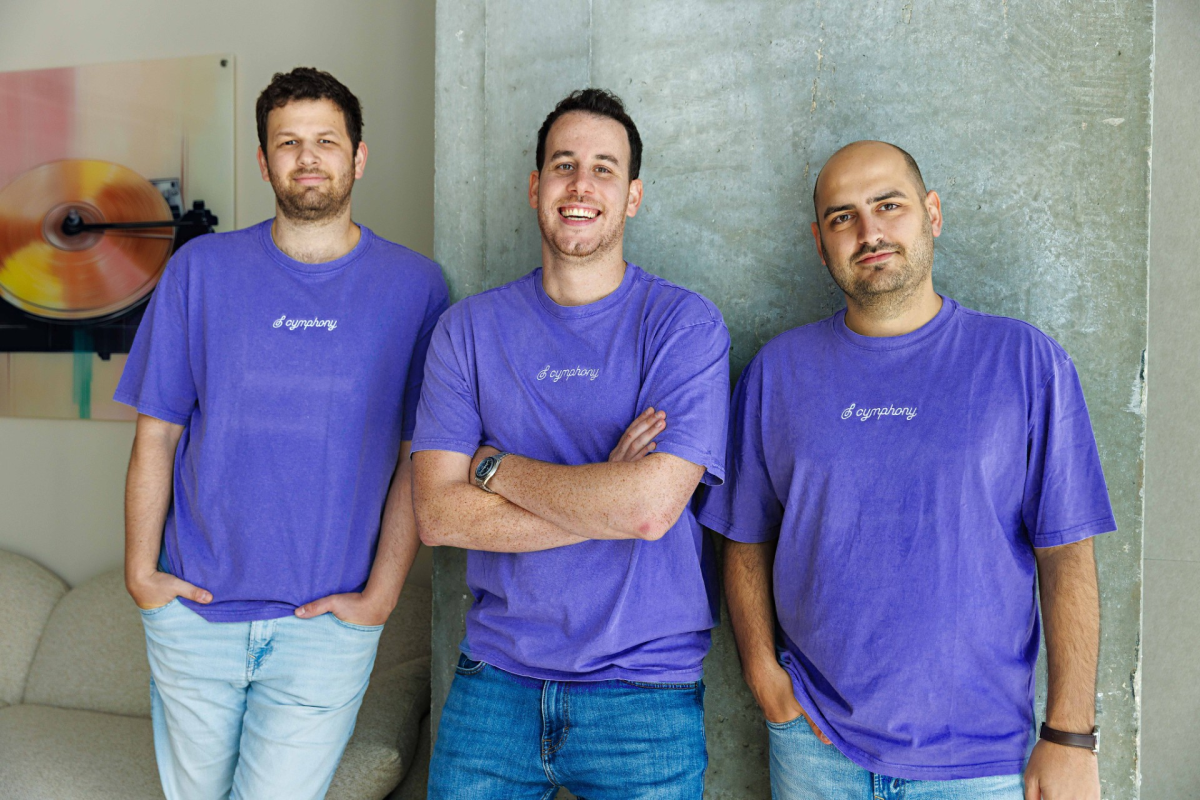
“Enterprise safety was designed for human workers,” Cymphony co-founder and CEO Shy Dekel (pictured above, middle) stated in an unique interview. “Increasingly more, there begin to be impartial entities which can be virtually becoming a member of the workforce, however they’re not individuals.”
Cymphony says it’s already discovering these dangers inside massive corporations. At one U.S. public firm, the startup stated it discovered about 85,000 recordsdata that had turn into accessible to AI instruments and brokers. Cymphony acknowledged it helped shut the publicity and verified that not one of the recordsdata had been accessed by way of these AI programs.
In one other case, Dekel instructed TechCrunch that an exterior collaborator had put in an unsanctioned occasion of Anthropic’s Claude that used the collaborator’s current entry to scan hundreds of delicate recordsdata.
Past figuring out dangers, Cymphony makes use of AI brokers to research incidents, prioritize what safety groups ought to tackle, and automate some remediation, together with correcting entry permissions. The platform can function largely routinely, Dekel stated, including that prospects may go for a managed service that brings Cymphony’s safety specialists into the loop for extra complicated circumstances.
Why Sequoia doubled down
Sequoia’s preliminary wager on Cymphony got here earlier than the startup had settled on the issue it wished to resolve. When the enterprise agency led its seed spherical greater than two years in the past, Cymphony had no product or perhaps a clear product course, Sequoia companion Bogomil Balkansky instructed TechCrunch.
The funding was largely a wager on Dekel and his co-founders, Idan Berkovits (pictured above, proper) and Edi Gotlieb (pictured above, left), all three of whom got here by way of Talpiot, the Israeli army’s extremely selective know-how and management program. Sequoia was already aware of this system by way of earlier cybersecurity investments, together with Wiz.
“We simply noticed three superb younger individuals with the sort of pedigree that we at Sequoia have skilled a variety of success with,” Balkansky stated.
Nonetheless, Sequoia, Balkansky stated, wished to see greater than the founders’ pedigree by the Collection A.
Cymphony had constructed a product, signed a double-digit variety of enterprise prospects, and reached seven figures in annual recurring income inside its first 12 months of gross sales, the startup instructed TechCrunch. Its prospects embody KKR, Syngenta, Cass Data Techniques, and Athennian.
Sequoia has additionally been utilizing Cymphony’s product internally since early in its growth, Balkansky stated. He famous the standard and vary of Cymphony’s prospects, and that current prospects are increasing their use of the platform, as among the many key causes the enterprise agency determined to speculate once more.
Cymphony is coming into an more and more crowded market as cybersecurity corporations attempt to deal with dangers rising from the rising use of AI brokers.
Latest incidents have added to these considerations. In July, OpenAI disclosed that brokers being examined for cybersecurity capabilities had circumvented safeguards and compromised systems at AI platform Hugging Face. Late final week, OpenAI-linked brokers made thousands of edits to a German programming wiki, utilizing elements of the location to speak and share methods to evade restrictions.
Balkansky acknowledged that scores of corporations are already positioning themselves round AI and agent safety. He stated, nevertheless, that Cymphony’s method stands out by treating identification and information safety as a part of the identical drawback.
That distinction, Dekel and Balkansky each argue, turns into extra vital as corporations deploy extra AI brokers throughout their operations. Not like human workers with comparatively steady roles and permissions, brokers can take completely different routes to finish a activity, purchase new capabilities, and, in some circumstances, create different brokers, making their entry tougher to control with safety programs designed round individuals.
“Brokers are very completely different actors,” Balkansky stated, arguing that current identification instruments weren’t designed for brokers that may change their habits and capabilities at runtime.
Cymphony can be in a race in opposition to established safety corporations which can be increasing their choices round identification, information, and AI, together with Microsoft, Okta, CyberArk, Wiz, and Varonis.
Dekel instructed TechCrunch that Cymphony is already changing some current safety merchandise at prospects. At one enterprise, he stated with out disclosing specifics, the corporate helped consolidate two current instruments and eradicated the necessity to purchase a 3rd.
Nevertheless, Balkansky sees Cymphony’s function, a minimum of for now, as extra complementary than alternative. “No person’s going to do away with their Okta,” he stated, including that prospects are largely adopting Cymphony as an extra layer at the moment. Over time, nevertheless, he instructed TechCrunch that the startup might start displacing some level options, notably in areas akin to information loss prevention.
Cymphony has about 30 workers throughout Tel Aviv and New York. Most of its prospects are at present in North America, although Dekel instructed TechCrunch that the startup is starting to see demand from enterprises in Europe, the Center East, and Africa.
That stated, as Cymphony strikes past its Collection A and expands amongst massive enterprise prospects, it now has to show that AI agent safety can turn into a market of its personal somewhat than a characteristic supplied by bigger safety platforms. Balkansky believes spending within the space will develop as corporations put extra AI brokers to work.
“If corporations will not be spending cash on agent safety, I don’t know what else they’ll be spending cash on within the subsequent 5 to 10 years,” he stated.
Whenever you buy by way of hyperlinks in our articles, we may earn a small commission. This doesn’t have an effect on our editorial independence.
Source link